As we learn to live our lives amid the fearful daily realities of a global pandemic, this course returns to another paranoid world of Mutually Assured Destruction (MAD), revisiting the apocalyptic nuclear imaginary of the 1960s and 1970s Cold War.
With an emphasis on the tropes of internalised surveillance, the viral and the catastrophic, we will remobilise the invisible texts of the conflict to reframe our understanding of how transnational emergency can unfold as a cultural phenomenon.
How did makers choose to model the future at a time when an ominous potentiality for megadeath had entered the zeitgeist? Why would a distinctive brand of survivalist discourse emerge as a counterpoint to the advent of neoliberalism? And how do creative strategies evolve, or mutate, in a paranoid environment?
This syllabus will include films such as Peter Watkins docudrama
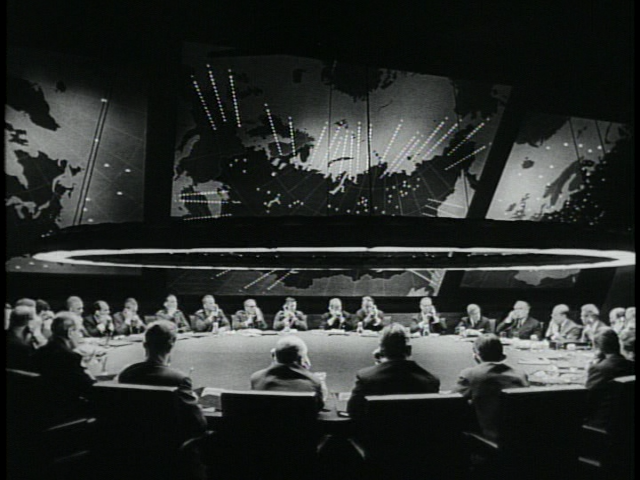
The War Game (1966) and Stanley Kubrick’s Dr. Strangelove (1964); speculative science fiction by Ursula K. Le Guin, Octavia
Butler, Philip K.
Dick, and J.G. Ballard; theory from Adrienne Maree Brown; spy fiction by John Le Carré; nonfiction in John Hersey’s Hiroshima (1946); and prophetic fantasy in Doris Lessing’s Memoirs of a Survivor (1975).